
The Rise of the Information State
Crime Records, Statistics, and Early Intelligence Systems
By the late nineteenth century the task of policing was no longer limited to patrolling streets or arresting offenders. Governments were beginning to realise that maintaining order also depended on understanding patterns of behaviour across entire populations. Crime was no longer viewed as a collection of isolated incidents but as a problem that could be studied, measured, and managed through information.
This shift marked the beginning of what historians sometimes describe as the “information state.” Through statistics, registries, and increasingly sophisticated record keeping, authorities began to assemble detailed knowledge about crime and social disorder. These systems would eventually form the foundations of modern policing databases and intelligence services.
The Statistical Revolution
One of the key figures associated with this transformation was Edwin Chadwick, a social reformer whose work on public administration emphasised the importance of data in understanding social problems.
Chadwick believed that effective governance required systematic information about the conditions affecting public life. By collecting statistics on health, poverty, and crime, officials could identify patterns that might otherwise remain hidden.
This approach represented a new way of thinking about public order. Instead of responding only after problems appeared, administrators could use statistical evidence to anticipate risks and design policies aimed at prevention.
Although Chadwick is most often remembered for his work on public health, the same analytical approach influenced the development of modern policing.
Recording the Criminal
As policing became more professional, authorities began to recognise the importance of keeping systematic records on known offenders. Early efforts focused on compiling registers of individuals who had previously been convicted of crimes.
These records included physical descriptions, known aliases, and details of past offences. By maintaining such registries, police forces could identify repeat offenders more easily when new crimes occurred.
The development of the Habitual Criminals Register in the mid-nineteenth century represented a major step in this direction. It provided a centralised record of individuals considered likely to reoffend, enabling investigators to track criminal activity across different regions.
This system transformed policing from a purely reactive activity into one that relied increasingly on information and documentation.
The Arrival of the Mugshot
Technological innovations soon enhanced these record systems. Photography, which had developed rapidly during the nineteenth century, provided a reliable way of documenting the appearance of suspects.
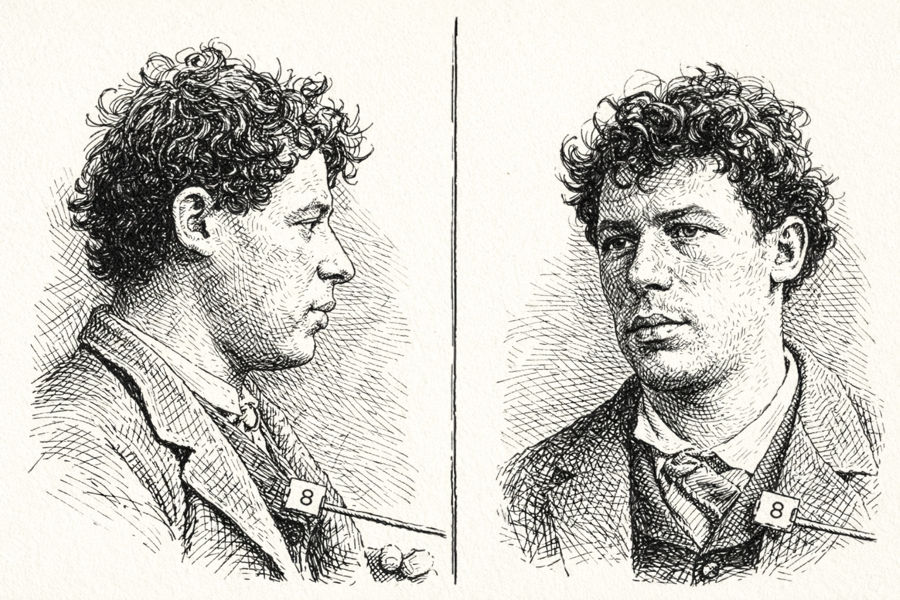
Police forces began creating photographic records, commonly known as mugshots, which could be used to identify individuals involved in criminal activity. These images were often accompanied by written descriptions detailing height, distinguishing marks, and other physical characteristics.
The use of photography made criminal identification more accurate and helped establish the visual record keeping practices that later became standard in law enforcement.
Such developments also reflected a broader trend toward scientific methods in policing. Crime was increasingly studied using techniques borrowed from fields such as statistics, medicine, and anthropology.
Intelligence and Political Surveillance
At the same time, governments were becoming more concerned about political unrest and organised movements that might challenge state authority.
During the nineteenth century Britain experienced several waves of political agitation, including the Chartist movement and later Irish nationalist campaigns. These developments encouraged authorities to expand their capacity for gathering information about groups considered potential threats.
Specialised police units began monitoring political organisations, collecting reports on meetings, publications, and individuals involved in activism. The emergence of Special Branch within the Metropolitan Police was closely linked to these concerns.
Although originally created to address specific security threats, these intelligence functions gradually became a permanent part of the policing system.
The Foundations of Modern Intelligence
By the end of the nineteenth century the combination of statistics, registries, photography, and intelligence gathering had transformed the nature of policing.
Police forces were no longer simply responding to crime as it occurred. They were analysing information, identifying patterns, and maintaining records that allowed authorities to track individuals and organisations over time.
These developments laid the groundwork for the intelligence and security systems that would emerge in the twentieth century. Agencies responsible for national security, including those dealing with espionage and political extremism, built upon many of the record keeping and information gathering techniques first developed by nineteenth-century police administrations.
In this sense the rise of the information state represented the final stage in the transformation of British policing. From parish constables and watchmen to professional detectives and intelligence networks, the nineteenth century witnessed the creation of institutions that continue to shape modern systems of law enforcement and security.
More about this topic
Research Sources
These articles draw on research from the following historical and academic sources.
0 Comments