
The Peelian Revolution
The Birth of the Metropolitan Police
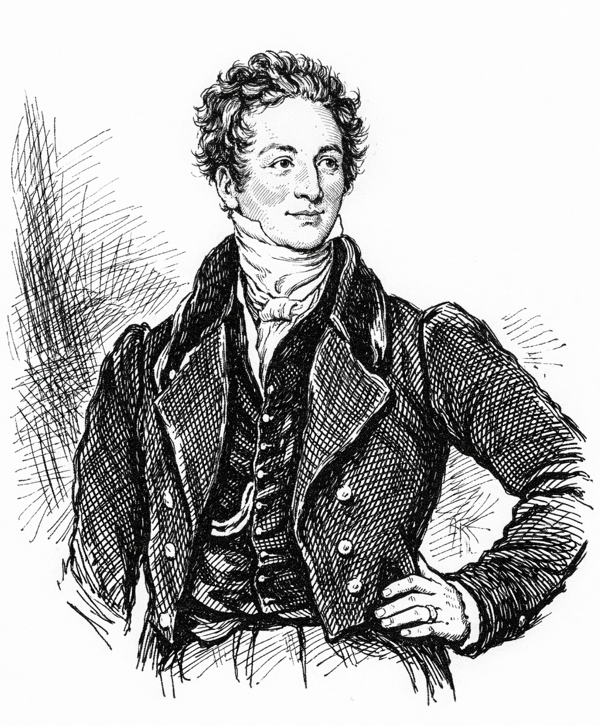
On a September morning in 1829, Londoners encountered a new and unfamiliar presence on their streets. Men in dark blue coats and tall hats were walking regular patrols through the city’s crowded neighbourhoods. They carried wooden truncheons and small rattles used to summon assistance, but they did not carry firearms. Their task was simple but unprecedented: to patrol the streets continuously in order to prevent crime before it occurred.
For many people the sight was unsettling. Britain had long resisted the idea of a professional police force. To some observers these new officers looked uncomfortably similar to the uniformed authorities that enforced order in continental Europe. Yet the system introduced that year would become the foundation of modern policing. The reform was the work of Home Secretary Robert Peel, and the principles behind it would reshape how law enforcement operated across Britain.
A City in Need of Reform
By the 1820s London had become one of the largest cities in the world. Its population had expanded dramatically during the previous century, creating densely populated districts where poverty, commerce, and political agitation often collided.
The traditional parish constable system was struggling to cope with this growth. Local watchmen patrolled the streets irregularly, and parish officers lacked both professional training and consistent authority. Serious disturbances sometimes required military intervention, an approach that risked escalating tensions between the public and the government.
Reformers increasingly argued that Britain required a new approach to maintaining order. Rather than relying on part-time officials or emergency measures, the city needed a permanent organisation capable of supervising urban life on a daily basis.
Robert Peel’s Solution
As Home Secretary, Robert Peel believed that policing should be organised as a professional public service. In 1829 he introduced the Metropolitan Police Act, legislation that created a centrally organised police force responsible for the greater London area.
The new force was carefully designed to avoid the appearance of military control. Officers wore blue uniforms rather than the red coats associated with soldiers, and their equipment was deliberately modest. Truncheons and rattles symbolised restraint rather than force.
The men quickly acquired the nicknames “Peelers” and “Bobbies,” both derived from the Home Secretary’s surname. These informal titles reflected the personal connection between Peel’s reforms and the officers who now patrolled the capital.
More importantly, the structure of the force emphasised organisation and accountability. Officers worked regular patrols known as “beats,” moving through assigned neighbourhoods according to a schedule that ensured constant visibility. Supervisors monitored their routes, creating a disciplined system designed to deter crime through presence rather than intimidation.
The Philosophy of Policing by Consent
At the heart of Peel’s reforms was a philosophy that later became known as “policing by consent.” The idea was that police authority should ultimately rest on public approval rather than coercion.
In practical terms this meant that officers were expected to behave as members of the community rather than as agents of state power imposed upon it. Their success depended on maintaining public cooperation and trust.
This philosophy was later summarised in a set of guiding principles often associated with Peel. One of the most widely quoted ideas states that “the police are the public and the public are the police,” emphasising the shared responsibility between citizens and officers in maintaining order.
The emphasis on prevention was also central to the system. Rather than focusing primarily on arresting offenders after crimes had occurred, the new police force aimed to discourage offences by maintaining a visible presence on the streets.
Suspicion and Resistance
Despite these careful design choices, the introduction of the Metropolitan Police was far from universally welcomed. Many Londoners feared that a professional police force could threaten traditional liberties.
Political critics worried that the government might use police powers to suppress dissent. Others simply distrusted the idea of uniformed officers patrolling civilian neighbourhoods.
Early officers therefore faced both practical and social challenges. They had to demonstrate that the new system could maintain order without becoming oppressive. Discipline, restraint, and professional conduct were essential to gaining public acceptance.
Over time the steady presence of patrol officers began to change attitudes. Residents who initially viewed the police with suspicion gradually came to see them as a normal part of urban life.
A New Model of Policing
The Metropolitan Police represented more than a new institution. It introduced a different philosophy of governance.
Instead of relying on occasional intervention, the state now maintained a constant yet restrained presence within the city. Officers gathered information about local conditions, monitored potential disturbances, and intervened early to prevent disorder.
This system proved effective enough that similar forces soon appeared in other British cities. Over time the model spread across the country and influenced policing systems throughout the British Empire.
By the mid-nineteenth century the idea of professional policing, once deeply controversial, had become widely accepted as an essential feature of modern urban society.
The transformation begun in 1829 did not simply change how crimes were investigated. It redefined how the state and the public cooperated to maintain order in a rapidly changing world.
More about this topic
Research Sources
These articles draw on research from the following historical and academic sources.
0 Comments