
The Birth of the Detective
Scotland Yard and the CID
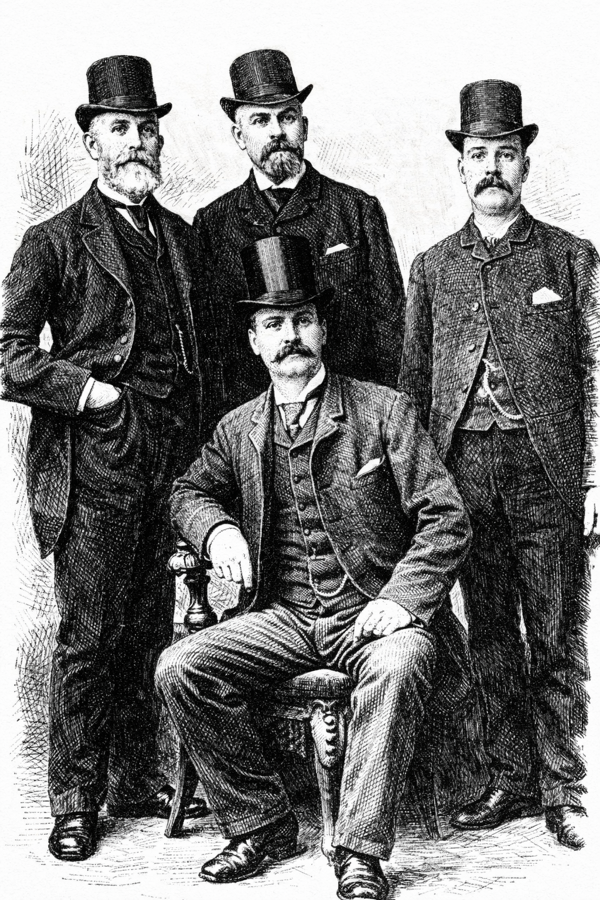
In the early decades of the nineteenth century, the idea of a police officer working undercover would have seemed deeply unsettling to many Britons. The country had a long tradition of mistrusting secret policing, associating it with the authoritarian regimes of continental Europe. While the newly created Metropolitan Police patrolled London’s streets in uniform, the idea of officers quietly gathering intelligence or conducting covert investigations remained controversial.
Yet the realities of urban crime were beginning to challenge those assumptions. As London expanded and criminal activity became more organised, it became clear that patrols alone could not solve every case. Some crimes required investigation, observation, and patient collection of evidence. Out of this necessity emerged a new kind of officer: the detective.
Suspicion of Secret Policing
Britain’s resistance to investigative policing was rooted in political culture. Throughout the eighteenth and early nineteenth centuries, many citizens believed that secret police forces were instruments of tyranny. Governments in France and other European states had long used surveillance and informants to monitor political dissent.
British reformers were therefore cautious about creating any institution that might resemble such systems. When the Metropolitan Police was established in 1829, its design emphasised visible patrols and prevention rather than hidden investigation.
Uniformed officers walking regular beats reassured the public that policing was transparent and accountable. Anything resembling covert surveillance was treated with suspicion.
However, criminals did not always operate in ways that uniform patrols could easily prevent. Serious offences, particularly organised theft or murder, required a different approach.
The Creation of the Detective Branch
In 1842 the Metropolitan Police quietly introduced a small group of officers dedicated to investigative work. This unit, known as the Detective Branch, consisted of only a handful of men tasked with pursuing criminals and gathering evidence after offences had occurred.
Unlike ordinary patrol officers, detectives sometimes worked in plain clothes. They followed suspects, interviewed witnesses, and built cases that could be presented in court.
The creation of this branch marked an important shift in British policing. Although the force remained committed to visible patrols, it now recognised that effective law enforcement required specialised investigative skills.
At first the Detective Branch remained small and cautious in its operations. The authorities were keenly aware that public confidence in the police depended on avoiding any impression of secret surveillance.
Inspector Field and the Public Imagination
One of the early figures associated with detective work was Inspector Charles Frederick Field. His work investigating crimes in London attracted the attention of writers and journalists, including Charles Dickens.
Dickens became fascinated by the emerging world of criminal investigation and accompanied Field on several occasions while observing police work. The author later drew inspiration from these experiences in his writings, helping introduce the public to the idea of the detective as a skilled professional rather than a shadowy government agent.
This cultural shift was significant. Through newspapers and literature, investigative policing began to appear not as a threat to liberty but as a necessary tool for solving complex crimes.
Later fictional characters, most famously Sherlock Holmes, would further romanticise the detective figure. The careful observation, deduction, and reasoning associated with these characters reflected real developments in nineteenth-century investigative practice.
Scandal and Reform
Despite these successes, the Detective Branch was not without problems. In the 1870s the Metropolitan Police faced a serious crisis when several detectives became involved in corruption related to the so-called Great Turf Fraud.
The scandal exposed weaknesses in supervision and organisation within the investigative division. Public confidence was shaken, and reform became unavoidable.
In response, the Metropolitan Police reorganised the Detective Branch in 1878, creating a new department known as the Criminal Investigation Department, commonly called the CID. The reforms introduced clearer structures of authority and improved oversight of investigative work.
The creation of the CID marked the full professionalisation of detective policing in Britain.
The Professional Detective
By the late nineteenth century the detective had become an established figure within British policing. CID officers specialised in complex investigations, tracking criminals across jurisdictions and coordinating information gathered from multiple sources.
The methods they employed increasingly relied on careful observation, record keeping, and collaboration between officers. Detectives maintained files on known offenders, analysed patterns of criminal behaviour, and used emerging technologies such as photography to document suspects.
These practices represented an important step toward modern investigative policing. Crime was no longer viewed solely as a series of isolated incidents but as patterns that could be studied and understood.
The transformation also reflected broader changes in how the state managed information and security. As systems of record keeping and intelligence gathering developed, policing became part of a larger administrative framework that sought to understand and regulate social behaviour.
What began as a small experimental branch in 1842 had grown into a professional investigative service capable of handling some of the most complex criminal cases in the country.
The detective, once regarded with suspicion, had become a central figure in the modern police system.
More about this topic
Research Sources
These articles draw on research from the following historical and academic sources.
0 Comments