
How Britain Invented Modern Policing
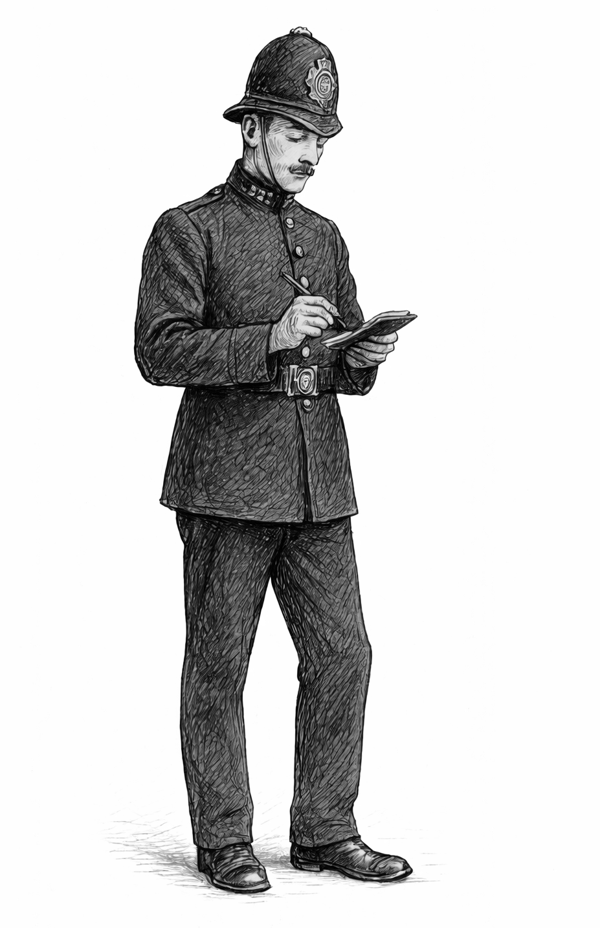
At the beginning of the nineteenth century Britain did not possess a police force in the modern sense. Law enforcement relied on a patchwork of parish constables, watchmen, and local officials whose responsibilities had evolved over centuries. In small communities this system could function reasonably well. In rapidly expanding cities such as London, however, it struggled to maintain order.
Industrialisation, urban growth, and political unrest were transforming British society. As populations increased and cities grew more complex, the older methods of maintaining the peace proved increasingly inadequate. Out of these pressures emerged a series of reforms that would reshape policing not only in Britain but across much of the world.
The nineteenth century therefore witnessed the gradual creation of a new system: professional police forces, investigative departments, intelligence gathering, and organised record keeping. Together these developments formed the foundations of modern policing.
The End of Parish Policing
For centuries the responsibility for maintaining order rested largely with the parish constable and the night watch. These positions were rarely professional roles. Parish constables were typically local citizens appointed for limited periods of service, while watchmen patrolled the streets at night to deter disorder.
The system reflected an older vision of community responsibility, where maintaining the peace was considered a duty shared among residents rather than the work of a specialised profession.
Yet as cities expanded during the late eighteenth and early nineteenth centuries, this approach proved increasingly fragile. London’s population grew rapidly, commercial districts expanded, and new forms of crime appeared in crowded urban environments. Watchmen were often poorly paid and poorly equipped, while parish constables lacked the authority and experience needed to deal with organised criminal activity.
By the early nineteenth century many reformers believed that a new approach was required.
The Peelian Reform
The most important turning point came in 1829 when Home Secretary Robert Peel introduced the Metropolitan Police Act. The legislation created a centrally organised police force responsible for maintaining order in the growing metropolis.
The new Metropolitan Police was designed carefully to avoid the appearance of military authority. Officers wore blue uniforms rather than the red coats associated with soldiers and carried simple equipment such as truncheons and rattles.
More importantly, Peel emphasised the principle that police authority should depend on public cooperation rather than force. Officers patrolled assigned areas known as beats, maintaining a constant presence that aimed to prevent crime before it occurred.
This idea of policing by consent became one of the defining features of British law enforcement.
The Emergence of the Detective
Uniformed patrols could deter many forms of crime, but some offences required investigation after the fact. As the nineteenth century progressed, police authorities began to recognise the need for officers who specialised in gathering evidence and tracking offenders.
In 1842 the Metropolitan Police established a small Detective Branch responsible for investigative work. These officers sometimes operated in plain clothes and focused on solving crimes that could not be prevented through routine patrols.
Although the idea of undercover investigation initially raised concerns about secret policing, the success of detectives in solving high-profile cases gradually changed public opinion. By 1878 the Detective Branch had evolved into the Criminal Investigation Department, known as the CID, establishing a permanent place for investigative policing within the system.
Policing Beyond Britain
While London was developing a civilian police force, a different model emerged in Ireland. The Royal Irish Constabulary operated as a more centralised and disciplined organisation, often stationed in barracks and equipped to respond to rural unrest and political tensions.
This force developed methods that later influenced policing throughout the British Empire. Colonial administrations adopted similar structures when establishing police forces in territories where maintaining order required a strong central presence.
The coexistence of these two models, civilian policing in Britain and paramilitary constabularies in other regions, illustrates how policing evolved differently depending on local political conditions.
The Rise of Information and Intelligence
By the later decades of the nineteenth century policing was becoming increasingly dependent on information. Authorities began collecting statistics on crime, maintaining registries of repeat offenders, and developing systems for identifying suspects.
Technologies such as photography allowed police forces to create visual records of criminals, while written registries tracked individuals considered likely to reoffend. These developments reflected a broader shift toward administrative systems that relied on organised information.
At the same time governments became more concerned about political movements and organised unrest. Specialised units began gathering intelligence on groups considered potential threats, laying the foundations for the security and intelligence services that would emerge in the twentieth century.
A System That Spread Worldwide
The reforms introduced during the nineteenth century transformed policing from a local civic duty into a professional public institution. Patrol officers, detectives, and information systems all became part of a larger administrative framework designed to maintain order in complex societies.
The influence of this model extended far beyond Britain. Police forces across the British Empire adopted variations of the systems first developed in London and Ireland. Many modern policing institutions around the world still reflect these nineteenth-century foundations.
What began as a response to the pressures of a rapidly changing society ultimately produced a system that reshaped the relationship between citizens, law enforcement, and the state.
More about this topic
Research Sources
These articles draw on research from the following historical and academic sources.
0 Comments