
When asked about fate
Correspondence: A gift of solace, to a young relative
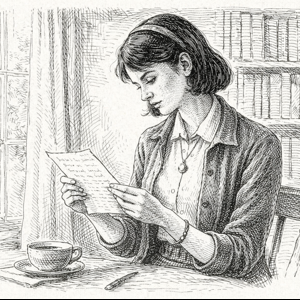
My dear child,
It is the year 1967. I am eighty years of age. I have lived through the dismantling of empires and the arrival of an age that moves faster than the human spirit was ever meant to travel. But I do not write to you about history. History is only the scenery that flashes past a train window. I write to you about the tracks beneath it.
You ask how a soul is meant to live between fortune and loss. You speak as though “good” fate and “bad” fate are two opposing forces, each demanding obedience. They are not. They are the same tide, advancing and withdrawing according to its own rhythm. If you fasten your happiness to the high water, you will be left exposed when it recedes. To live between them is to discover the still point where the water never reaches.
There is a space, so small it is often overlooked, between what happens to you and who you are. Most people live their entire lives without noticing it. When fate arrives, they respond without pause, pulled along like leaves in a strong wind. But a disciplined mind learns to inhabit that space. It understands that this narrow interval is the only true ground a person ever owns.
Consider your life as a task, not a story you are obliged to admire or regret.
When fortune is kind, your task is restraint. Prosperity, health, recognition, these are useful things, but they are not identity. If you allow them to define you, then fate governs you. Use what is given, but do not clutch it. Hold the world as one holds water, with an open hand.
When fortune is cruel, your task is dignity. Pain, loss, and the nearness of death are not intrusions upon life. They are life, distilled. In wards, ruins, and places where hope thins, I have seen this truth made plain. Those who remained intact were not those spared suffering, but those who refused to let suffering dictate their meaning. They replaced the question “Why has this happened to me?” with the far more useful one, “How shall I meet this?”
If you are to stand at the threshold, you must accept a difficult fact. The world beyond you is indifferent. Fate does not despise you when it breaks something you love, and it does not favour you when it grants relief. It simply unfolds. Once you understand this, you stop pleading with the weather.
Your inner state must therefore become independent of conditions. There are things that belong to fate, and there are things that belong to you.
Your body, your reputation, your possessions, these are on loan. They may be altered, taken, or returned without warning.
Your judgement, your will, your character, these are not. Nothing can touch them unless you allow it.
Guard that distinction. Everything else is secondary.
Do not aim for a good life. Aim for a meaningful one. Meaning is weight in the keel. It keeps you upright when the sea turns rough. When you know why you stand, the manner of standing becomes survivable. You stop being carried by circumstance and begin to observe it clearly.
Keep your eyes on the horizon, not on the waves. The soul that remains centred, that knows its worth is not measured by reward or by injury, is the only soul that is free. Fate may take your breath, but it cannot take your consent.
Go forward with a measured step. Do not hurry. Do not flinch.
Stay steady,
My kindest regards
M. Shirley
0 Comments