
Ghost vs Spirit
The Taxonomy of the Unseen in Paranormal Research
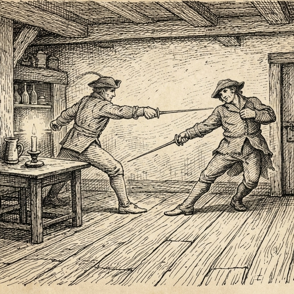
At four in the morning, in a timber-framed inn in Rye, guests have reported the same scene for decades: the clash of steel, the stagger of a wounded man, a body dragged across floorboards toward a hidden door. The figures do not look at the witnesses. They do not vary their steps. The duel simply replays. Whether one calls it haunting or legend, it raises a sharper question than fear alone. What exactly is being seen?
Within serious paranormal research, the terms “ghost” and “spirit” are not interchangeable. One suggests an environmental echo, the other an intentional presence. This distinction, refined through psychical research, folklore studies, and modern psychology, forms the backbone of contemporary attempts to classify the unseen. The difference is not merely semantic. It shapes how investigators interpret testimony, design experiments, and understand human grief.
From Folklore to Psychical Research
The English word “ghost” once carried a broad meaning, referring to soul, breath, or animating principle. Over time, it narrowed to denote the apparition of a deceased person[1]. Across cultures, however, spirits of the dead were often understood as active agents capable of communication, protection, or vengeance. The tension between echo and agency has deep roots.
In the late nineteenth century, the Society for Psychical Research, founded in 1882 in London, attempted to bring methodological rigor to these reports[2]. Figures such as Frederic W. H. Myers and Edmund Gurney collected thousands of first-hand testimonies. They distinguished between crisis apparitions, often reported at the moment of a person’s death, and recurrent hauntings tied to specific locations. Already, a taxonomy was forming.
What emerged was a working divide. Some phenomena appeared interactive, conveying information unknown to the witness. Others behaved like recordings, repeating without deviation. That divide remains central today.
Residual Hauntings and the Stone Tape Hypothesis
The most widely cited model for non-interactive apparitions is the so-called Stone Tape theory, popularized by Nigel Kneale’s 1972 BBC drama The Stone Tape[3]. The idea proposes that emotionally intense events imprint themselves onto physical environments, particularly stone structures, and later “play back” under certain conditions.
Although the theory has no established basis in physics, it persists because it offers a coherent explanation for repetitive hauntings. A residual apparition, in this model, is not conscious. It is closer to a film loop than a visitor.
The Mermaid Inn in Rye, often cited among Britain’s most haunted locations, provides a textbook example. Reports of a duel in Room 16 follow a fixed sequence and appear indifferent to observers[4]. The consistency of the narrative, combined with its lack of response to questioning, leads many investigators to classify it as residual rather than intelligent.
Similar patterns are described at Herstmonceux Castle in East Sussex, where a “Phantom Drummer” is said to traverse the same path along the battlements[5]. Again, the figure’s predictability and isolation from witnesses fit the residual model.
Critics point out that no mechanism has been demonstrated by which stone could store and project sensory data. Yet as a descriptive category, “residual haunting” remains useful. It captures reports that behave like environmental memory rather than conscious survival.
Intelligent Hauntings and Mediumistic Claims
By contrast, an intelligent haunting implies awareness. The entity responds, adapts, or communicates. In the Spiritualist tradition, such presences are understood as spirits who have “crossed over” yet retain personality and agency.
Contemporary Scottish medium Gordon Smith, often profiled in British publishing and media, frames his work as communication with conscious spirits rather than trapped ghosts[6]. In interviews, he emphasizes evidential details, names, personal memories, recent events, as markers of authenticity. The crucial claim is interaction.
Historically, the SPR investigated similar cases, including apparitions that conveyed verifiable information unknown to the percipient at the time[2]. Whether one accepts the survival hypothesis or not, the distinction remains operational. If a reported presence answers questions, alters behavior in response to stimuli, or produces specific knowledge, it falls into the “intelligent” category.
This does not prove survival after death. It does, however, separate two classes of report: closed-loop phenomena and responsive phenomena.
The Psychological Lens: Haunted People Syndrome
Modern research complicates the taxonomy further. A 2022 case study published in Frontiers in Psychology explored what researchers termed “Haunted People Syndrome,” suggesting that some recurrent haunting reports cluster around individuals rather than places[7]. Traits such as transliminality, a permeability between conscious and unconscious processes, correlated with higher reports of anomalous experience.
This does not dismiss witnesses as delusional. Instead, it reframes hauntings as interactions between perception, stress, and belief systems. Environmental ambiguity, drafts, creaking beams, fluctuating light, provides raw data. The mind supplies narrative.
Neuropsychiatric research also notes that sensed presences and apparitional experiences can arise from temporal lobe instability, sleep disruption, or electromagnetic variation[8]. Such findings offer a biological pathway for both residual and intelligent interpretations. The experience may feel external, yet be internally generated.
From this perspective, the ghost versus spirit distinction may describe phenomenology rather than ontology. It categorizes how an experience behaves, not necessarily what it is.
Poltergeists, Shadow Forms, and Expanding the Taxonomy
Beyond ghosts and spirits lie other reported entities. Poltergeist phenomena, characterized by object movement and loud disturbances, are frequently attributed by researchers to psychokinetic effects associated with living individuals, often adolescents under stress[9]. Here, the “haunting” centers on human energy rather than the dead.
Shadow figures and doppelgänger traditions complicate matters further. Folklore associates double sightings with omens or crisis states[1]. In modern accounts, shadow forms are often fleeting, peripheral, and resistant to classification.
What becomes clear is that paranormal taxonomy functions as a map. It helps investigators avoid conflating very different experiences under one word.
History, Grief, and Meaning
The human dimension remains central. Whether at the Mermaid Inn or in private homes, reports often cluster around loss. The SPR itself noted that many apparitional experiences occurred during bereavement[2]. Psychological research echoes this, linking sensed presence experiences to grief processing[8].
From one angle, a residual haunting is an architectural metaphor for trauma, history replaying within walls. From another, an intelligent spirit encounter is an emotional bridge, an attempt by the living to sustain connection.
The taxonomy therefore performs two tasks. It disciplines inquiry, distinguishing repetition from response. It also acknowledges that human meaning does not end at classification. Even if future neuroscience were to account for every apparition, the experiential weight would remain.
In the end, the duel at four in the morning, the phantom drummer on the ramparts, the message delivered in a séance hall, each occupies a different square on the map. Whether one interprets them as environmental memory, survival of consciousness, or psychological projection, the distinction between ghost and spirit sharpens the conversation.
The unseen may never yield a final answer. Yet careful taxonomy prevents confusion. It reminds us that not every echo speaks, and not every voice is an echo.
Paranormal Cases: More about this topic.
Works Cited
-
“Ghost.” Encyclopaedia Britannica.
Overview of historical and cultural meanings of ghosts and related apparitions, grounding terminology in established scholarship.
Live source | Return to citation [1] | Return to citation [1] -
Society for Psychical Research, History and Aims.
Primary institutional account of the SPR’s founding in 1882 and its investigative framework for apparitional cases.
Live source | Return to citation [2] | Return to citation [2] | Return to citation [2] -
“The Stone Tape.” Wikipedia.
Background on Nigel Kneale’s 1972 drama that popularized the Stone Tape hypothesis in modern paranormal discourse.
Live source | Return to citation [3] -
“The Mermaid Inn in Rye is among UK’s most haunted hotels.” The Argus.
Journalistic account documenting reported phenomena at the Mermaid Inn, often cited in residual haunting discussions.
Live source | Return to citation [4] -
“11 Most Haunted Places in Sussex.” Haunted Rooms.
Summary of regional legends including Herstmonceux Castle’s Phantom Drummer, useful as a historical case reference.
Live source | Return to citation [5] -
“Author Interviews: Gordon Smith.” The Bookseller.
Interview profile discussing Smith’s mediumship claims and distinction between spirits and residual phenomena.
Live source | Return to citation [6] -
Laythe et al., “Case Study of Recognition Patterns in Haunted People Syndrome.” Frontiers in Psychology, 2022.
Peer reviewed study examining psychological variables associated with recurrent haunting reports.
Live source | Return to citation [7] -
Persinger, “The Neuropsychiatry of Paranormal Experiences.” Journal of Neuropsychiatry and Clinical Neurosciences.
Explores neurological correlates of sensed presences and apparitional experiences.
Live source | Return to citation [8] | Return to citation [8] -
“Poltergeist.” Encyclopaedia Britannica.
Scholarly overview of poltergeist phenomena and competing explanatory models.
Live source | Return to citation [9]
0 Comments