
The Admiralty Constabulary
Britain’s Forgotten Naval Police Force (1949–1971)
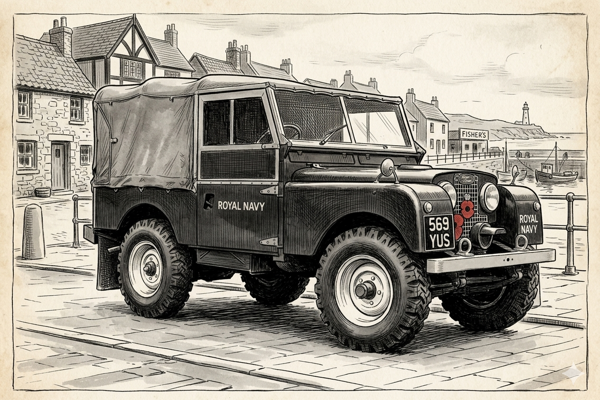
If you had walked past the high stone walls of Portsmouth or Devonport Dockyards in the mid-20th century, you would have met a certain type of officer. They weren’t your typical “bobbies” on a city beat; they were the men of the Admiralty Constabulary, a force that carried the weight of Britain’s maritime security on its shoulders for over two decades.
Warm, disciplined, and deeply rooted in naval tradition, the story of this force is a fascinating chapter of British history that deserves a bit of a polish.
A Quiet Birth in 1949
The Admiralty Constabulary officially “piped the side” and came into existence on 1 October 1949. While the name was new, the faces certainly weren’t. The force was essentially a clever gathering of three existing groups: the Royal Marine Police, their Special Reserve, and the Admiralty Civil Police.
By bringing these together, the Admiralty created a specialist civilian force that understood the unique language of the Navy. These officers weren’t just guarding buildings; they were protecting the “Senior Service” itself—its secret research, its massive ordnance, and the iconic dockyards that kept the fleet afloat.
Life on the Naval Beat
During the 1950s and 60s, the Admiralty Constabulary was a distinct breed. Their uniforms were a crisp, deep navy blue, and their cap badges featured the famous foul anchor—a symbol that told everyone exactly who they worked for.
What made them special was their reach. While they were civilian officers, they held full police powers. Under the Special Constables Act, they could exercise their authority within 15 miles of any naval station. This meant if a sailor got into a bit of “shore leave trouble” or if Crown property went missing from a local warehouse, the Admiralty Constabulary were the ones on the case.
They were a large family, too. At their height, over 3,500 officers were stationed at roughly 150 sites, from the bustling ports of the south coast to the remote naval hospitals and research centres tucked away in the countryside.
The Winds of Change
As the 1960s rolled on, the world began to change. The UK government realised that having three separate “private” police forces—one for the Navy, one for the Army, and one for the Air Force—was perhaps a bit like having three different kitchens in one house. It was a tad inefficient.
When the unified Ministry of Defence was created in 1964, the writing was on the wall for the Admiralty Constabulary’s independent status. The different branches began to work more closely together, sharing notes and standardising their approach to security.
The Final Salute: 1971
The end of the journey came on 1 October 1971. It was a bit of a bittersweet moment for those who loved the old naval traditions. The Admiralty Constabulary, along with its siblings from the Army and Air Force, was amalgamated to form the Ministry of Defence Police (MDP).
The anchor badges were tucked away into drawers, replaced by the new MDP insignia. The old “Admiralty Blue” began its slow transition into a standard national uniform. While the name vanished from the gatehouses, the spirit of those original dockyard guardians lived on. Many of the officers simply changed their buttons and carried on with the job they knew best: keeping the nation’s most sensitive sites safe and sound.
The Admiralty Constabulary may only have existed under that name for 22 years, but they were a vital bridge between the ancient traditions of the Royal Navy and the modern security forces we see today. They were the silent sentries of the sea, and their history is a proud one.
More about this topic
Research Sources
These articles draw on research from the following historical and academic sources.
0 Comments