
The Collapse of Parish Policing in Britain
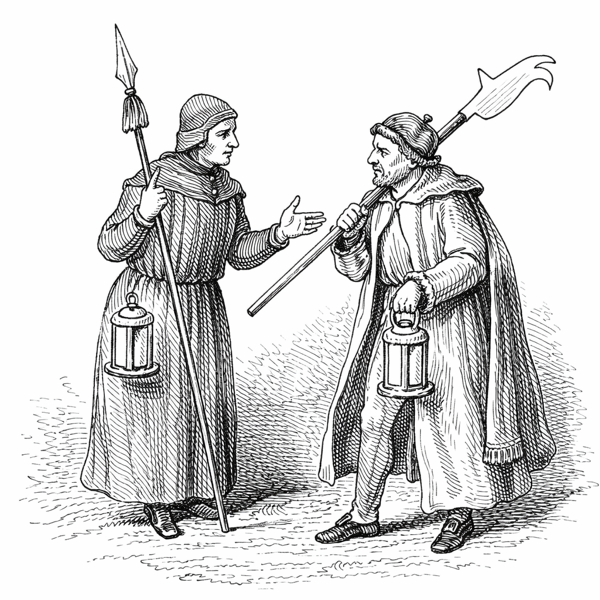
In the early hours of the nineteenth century, the streets of London were guarded by a system that had barely changed since medieval times. A night watchman, often elderly and poorly paid, might patrol with a lantern and staff while the parish constable, an ordinary citizen chosen for temporary duty, carried the authority of the law. In theory this system represented community responsibility for order. In practice it was increasingly unable to cope with the realities of a rapidly changing society.
By the early 1800s Britain stood on the edge of an unprecedented transformation. Industrialisation was swelling cities with new populations, commerce was expanding at extraordinary speed, and social unrest was becoming more visible. The old system of local watchmen and parish officers had been designed for small towns and rural communities. It was never meant to manage the pressures of a modern metropolis.
The Parish Constable System
For centuries the backbone of English law enforcement was the parish constable. These officers were not professional policemen. They were local citizens appointed for a limited period of service, often unpaid, and usually reluctant participants in the role.
Their duties included keeping the peace, pursuing offenders, and organising the night watch. Yet because the position rotated among local residents, few constables developed the experience or authority necessary to deal with serious crime. Many served reluctantly, regarding the task as an unwanted civic obligation rather than a profession.
The system relied heavily on the assumption that communities could regulate themselves. In small villages this arrangement often worked well enough. In the crowded districts of London, however, the model was beginning to fail.
The Night Watch
Alongside the parish constable stood the night watchman, whose task was to patrol the streets after dark. The watch system dated back centuries and had changed little over time.
Watchmen were frequently older men hired for modest wages. Their responsibilities were simple: observe the streets, deter disorder, and raise the alarm if trouble occurred. They carried lanterns, staffs, and sometimes wooden rattles to call assistance.
Despite these intentions, the night watch was widely ridiculed by the early nineteenth century. Satirical prints and newspaper reports portrayed watchmen as sleepy, ineffective, or easily intimidated. In many neighbourhoods they struggled to prevent theft or public disorder.
As London expanded, critics increasingly argued that a system designed for medieval towns could not possibly manage the complexity of a modern capital.
Early Attempts at Professional Policing
Although the traditional system remained dominant, several experiments hinted at a more professional approach to law enforcement.
One of the most notable developments was the Bow Street Runners, established in the mid-eighteenth century under the authority of magistrate Henry Fielding and later his half-brother John Fielding. Unlike parish constables, these officers were paid investigators who specialised in tracking criminals and gathering evidence.
The Bow Street Runners introduced elements that resembled modern policing. They conducted investigations, pursued suspects across jurisdictions, and developed networks of informants. Their success demonstrated that professional officers could be more effective than the ad hoc parish system.
Yet the Runners were few in number and focused primarily on solving crimes rather than preventing them. They could not provide the constant presence needed to deter offences in the growing city.
Another important development was the Thames River Police, established in the late eighteenth century to combat theft along London’s docks. This force demonstrated that organised patrols could significantly reduce crime in areas where property was vulnerable.
These experiments hinted at the future, but they remained isolated initiatives rather than a comprehensive system.
A City Under Pressure
By the early nineteenth century London had become one of the largest cities in the world. Industrial growth and migration had transformed its population, creating densely populated districts where poverty and opportunity existed side by side.
Urban expansion brought new forms of crime. Large markets and warehouses attracted theft. Crowded streets made it easier for pickpockets to operate. Political gatherings and demonstrations sometimes escalated into riots.
Authorities often relied on the military to restore order during major disturbances. Yet the use of soldiers against civilians carried serious political risks. When troops intervened during protests, violence could quickly escalate, undermining public confidence in government authority.
Many reformers began to argue that Britain required a new kind of force: neither military nor amateur, but a professional civil organisation capable of maintaining order through constant presence.
The Case for Reform
Among those advocating reform was Patrick Colquhoun, a magistrate and economist who believed that crime could be reduced through systematic prevention rather than punishment alone.
Colquhoun argued that policing should operate according to principles similar to those used in business administration. Officers should be salaried professionals whose job was to prevent crime through regular patrols and organised supervision.
His work on the Thames River Police offered practical evidence for this approach. By maintaining visible patrols along the docks, the force significantly reduced cargo theft, saving merchants substantial sums of money.
Despite such successes, public suspicion remained strong. Many British citizens feared that a professional police force might resemble the secret police systems associated with authoritarian governments in continental Europe.
These concerns slowed reform for decades.
A System Nearing Its End
By the 1820s the weaknesses of the parish constable system were impossible to ignore. London’s population had grown far beyond the scale that traditional arrangements could manage, and crime was becoming increasingly organised.
The combination of ineffective watchmen, reluctant parish officers, and occasional military intervention left a growing gap between the needs of the city and the tools available to maintain order.
It was in this climate of mounting pressure that a new idea began to gain traction: the creation of a professional police force whose primary task would be prevention rather than punishment.
The reform that followed would change British policing permanently.
In 1829, Home Secretary Robert Peel introduced legislation that created the Metropolitan Police, an organisation designed to provide constant patrols, central coordination, and a new philosophy of policing based on public cooperation.
The era of parish constables and watchmen was drawing to a close. A modern system of policing was about to begin.
More about this topic
Research Sources
These articles draw on research from the following historical and academic sources.
0 Comments