
The Occult
Reclaiming a Misunderstood Word
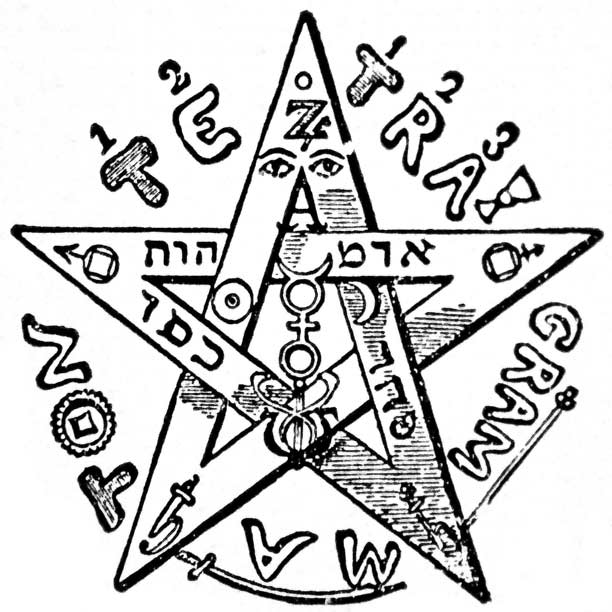
Say the word “occult” and most people picture candlelit basements, whispered incantations, and something vaguely dangerous lurking at the edge of reason. The image has been shaped less by history than by horror cinema, sensational headlines, and the cultural aftershocks of moral panic. The occult has become shorthand for menace.
Yet the word itself tells a different story. At its root, “occult” simply means hidden. It refers not to evil, but to that which is concealed from ordinary sight. For centuries, it described aspects of nature, philosophy, and spirituality that were thought to operate beneath the surface of visible reality. To understand the occult historically is not to endorse every claim made under its banner. It is to set the record straight about what the term has meant, and how it has been transformed.
The Meaning of “Occult”
The English word “occult” derives from the Latin occultus, meaning hidden or secret[1]. Early modern writers used the term to describe “occult qualities” in nature, forces that were not directly observable but were believed to produce real effects. Magnetism, for example, was once considered an occult property because its mechanism was unseen.
Encyclopaedia Britannica defines the occult as knowledge of hidden or secret things, particularly those involving the supernatural[2]. That definition already hints at the shift. What begins as “hidden” gradually becomes “supernatural,” and from there it is only a short step to “forbidden” or “dangerous.” Language accumulates cultural weight over time.
In the Renaissance and early modern period, however, the occult was not automatically sinister. It was part of a broader intellectual project that sought to understand correspondences within the cosmos. The visible and invisible were thought to interpenetrate. The occult referred to the unseen dimensions of an ordered universe.
Renaissance Philosophy and the Occult Sciences
To grasp how differently the term functioned in the past, one can look to figures such as Marsilio Ficino. Ficino, a fifteenth century Florentine philosopher, translated the works of Plato and wrote extensively on natural magic. For him, the universe was alive with sympathies and correspondences linking stars, plants, stones, and the human soul[3]. This was not fringe thinking. It was embedded within Renaissance humanism.
Similarly, Heinrich Cornelius Agrippa’s De Occulta Philosophia attempted to synthesise natural philosophy, astrology, and Christian theology into a coherent system[4]. Agrippa’s work, far from being a manual of horror, was an ambitious intellectual effort to describe the hidden structure of reality. “Occult philosophy” meant philosophy of the hidden aspects of nature.
Scholars of Western esotericism note that these traditions formed part of early scientific culture. Antoine Faivre, whose work helped define the academic study of Western esotericism, identifies core characteristics such as correspondences, living nature, and mediation between visible and invisible worlds[5]. The occult in this sense was a mode of inquiry.
The Stanford Encyclopedia of Philosophy similarly treats Western esotericism as a legitimate historical field of study, tracing its development from late antiquity through the Renaissance and into modernity[6]. What modern audiences label “occult” often overlaps with Hermeticism, Kabbalah, alchemy, and other traditions that contributed to intellectual history.
It is important to note that early modern thinkers did not sharply divide science and magic in the way modern categories do. Astronomy and astrology, chemistry and alchemy, medicine and herbal magic coexisted. Only later did disciplinary boundaries harden, leaving the occult stranded on the far side of legitimacy.
From Hidden Knowledge to Dark Aesthetic
The shift from intellectual tradition to horror trope accelerated in the nineteenth and twentieth centuries. Gothic literature, sensational journalism, and later film reframed the occult as a realm of danger. The aesthetic of secrecy became associated with transgression.
By the late twentieth century, this image intensified during episodes such as the “Satanic Panic” of the 1980s and 1990s. Conspiracy theories about hidden cults spread widely in North America and parts of Europe, despite a lack of credible evidence[7]. The word “occult” became a convenient label for imagined threats. Fear proved more memorable than nuance.
Popular media reinforced the association. Horror films drew on occult symbols to signal danger instantly. Pentagrams, grimoires, and séances became cinematic shorthand for evil. Over time, repetition hardened the link in the public imagination. The occult ceased to mean hidden knowledge and came to mean malevolent secrecy.
Yet historical evidence does not support the idea that occult traditions were inherently aligned with criminality or violence. Many were philosophical, mystical, or symbolic systems concerned with personal transformation. The horror aesthetic is a cultural overlay.
The Occult and the Development of Science
It may seem counterintuitive, but several ideas once labelled occult laid groundwork for scientific exploration. Alchemy, for instance, pursued the transformation of substances and the search for underlying principles. While its symbolic language differs from modern chemistry, historians recognise that alchemical experimentation contributed to laboratory techniques and empirical habits of mind.
The British Library notes that early modern manuscripts on magic and alchemy were often intertwined with medical and astronomical texts[8]. Knowledge was not neatly partitioned. What was hidden was simply what had not yet been fully explained.
As mechanistic models of the universe gained dominance in the seventeenth and eighteenth centuries, explanations invoking occult qualities were increasingly rejected. The term “occult” itself became pejorative, implying obscurantism. Yet this dismissal obscures the fact that many pioneers of modern science operated within a worldview that included esoteric assumptions.
To reclaim the word is not to revive outdated cosmologies. It is to acknowledge that intellectual history is layered. The occult formed part of the soil from which modern disciplines grew.
Psychology, Symbolism, and Inner Experience
Another reason the occult persists is psychological. Systems of tarot, astrology, and symbolic magic provide narrative frameworks through which individuals interpret experience. They offer structured meaning in times of uncertainty.
From a psychological perspective, symbolic systems function as tools for reflection. Carl Jung, though controversial in some respects, argued that alchemical imagery expressed archetypal processes of transformation within the psyche. Whether one accepts Jung’s broader theories or not, the point stands that occult symbolism often operates metaphorically rather than literally.
Modern surveys indicate that belief in astrology and related practices remains present in contemporary society[9]. For many, engagement is less about fatalistic prediction and more about identity exploration. The occult becomes a language for discussing uncertainty, choice, and personal development.
This psychological dimension complicates the horror stereotype. It suggests that occult practices endure because they address enduring human concerns, not because they harbour hidden malice.
Academic Study of the Occult
In recent decades, universities have increasingly treated Western esotericism as a serious field of research. Scholars examine texts, rituals, and historical movements with the same critical tools applied to other intellectual traditions. The Routledge volume Western Esotericism: A Guide for the Perplexed provides a structured overview of key movements and concepts[10]. The subject is no longer confined to the margins of scholarship.
This academic reframing helps separate descriptive analysis from sensationalism. One can study alchemy, ceremonial magic, or Rosicrucianism without endorsing supernatural claims. The occult becomes an object of cultural and historical inquiry.
Such scholarship underscores a central point. The occult is not a monolithic tradition. It is an umbrella term covering diverse practices, many of which differ radically in purpose and worldview. Collapsing them into a single horror trope flattens complexity.
Why the Word Matters
Language shapes perception. When the occult is treated exclusively as sinister, serious historical traditions are reduced to caricature. More importantly, nuanced conversations about belief, symbolism, and intellectual history are cut short.
Reclaiming the term does not require romanticising it. Some occult movements have been eccentric, misguided, or entangled with problematic ideologies. The point is accuracy. The occult, in its original sense, refers to what is hidden. It encompasses philosophical inquiry, symbolic systems, mystical speculation, and cultural imagination.
The horror trope thrives because it is vivid and emotionally charged. But history is quieter. It reveals scholars poring over manuscripts, physicians casting horoscopes, alchemists tending furnaces, and philosophers debating correspondences. It reveals an ongoing human attempt to understand what lies beneath the surface of things.
Perhaps the most honest conclusion is this: the occult is neither inherently dark nor inherently enlightened. It is a category shaped by shifting cultural boundaries between knowledge and mystery. To set the record straight is to restore depth to a word that has been flattened by fear.
In doing so, we gain not only a clearer historical picture, but a reminder that what is hidden is not always hostile. Sometimes it is simply waiting to be understood.
Works Cited
-
Etymonline, “Occult”.
Etymological history tracing the word to the Latin occultus, meaning hidden or secret.
Live source | Return to citation [1] -
Encyclopaedia Britannica, “Occult”.
Overview definition and discussion of the occult as hidden or supernatural knowledge.
Live source | Return to citation [2] -
Encyclopaedia Britannica, “Marsilio Ficino”.
Biographical entry detailing Ficino’s role in Renaissance philosophy and natural magic.
Live source | Return to citation [3] -
Encyclopaedia Britannica, “Heinrich Cornelius Agrippa”.
Summary of Agrippa’s life and his influential work De Occulta Philosophia.
Live source | Return to citation [4] -
Faivre, Antoine, “Western Esotericism: A Guide for the Perplexed”.
Scholarly framework outlining defining characteristics of Western esoteric traditions.
Live source | Return to citation [5] -
Stanford Encyclopedia of Philosophy, “Western Esotericism”.
Academic overview situating esoteric traditions within intellectual history.
Live source | Return to citation [6] -
Encyclopaedia Britannica, “Satanic Panic”.
Historical account of the late twentieth century moral panic surrounding alleged occult cults.
Live source | Return to citation [7] -
British Library, “Magic and Witchcraft”.
Discussion of early modern manuscripts showing the overlap between magic, medicine, and science.
Live source | Return to citation [8] -
Pew Research Center, “New Age Beliefs”.
Survey data on contemporary engagement with astrology and related practices.
Live source | Return to citation [9] -
Routledge, “Western Esotericism: A Guide for the Perplexed”.
Publisher page for a foundational academic text outlining the study of Western esotericism.
Live source | Return to citation [10]
0 Comments