
Why No One Can Properly Define the Supernatural
| This article is part of the Writing the Supernatural series. |
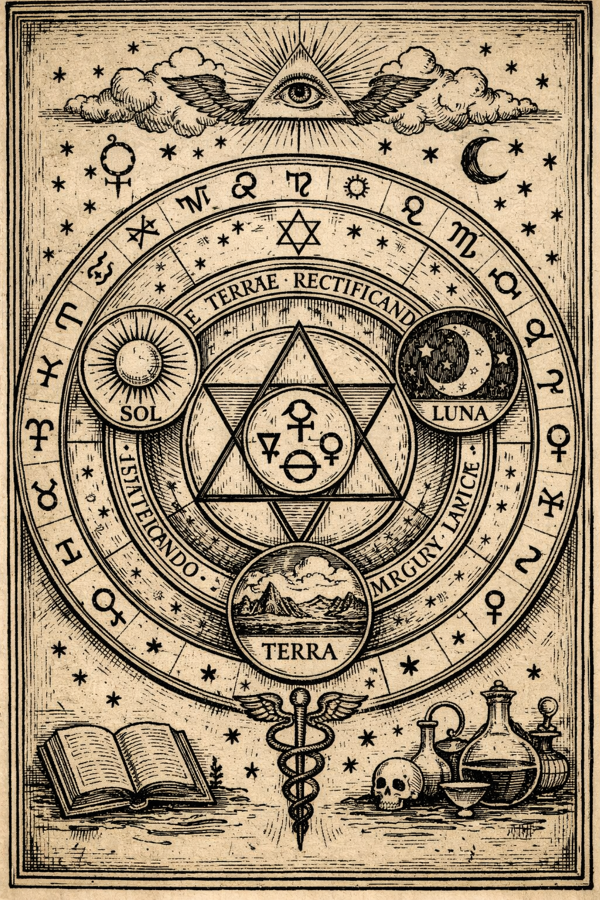
The word supernatural appears simple at first glance. It is used casually in conversation, in fiction, and in popular culture to describe ghosts, magic, psychic abilities, divine intervention, or mysterious forces beyond ordinary experience. Yet when one attempts to define the term precisely, the meaning quickly becomes uncertain.
The difficulty is not accidental. The word supernatural has been used for centuries by different disciplines that each interpret it in their own way. Theology, folklore, philosophy, and scientific inquiry all approach the concept from different directions. As a result, what one field calls supernatural another may classify differently.
This confusion has produced a problem familiar to anyone who studies the subject: the supernatural is widely discussed, but rarely defined in a consistent or satisfying way.
Understanding why requires looking at how the term developed.
The Theological Meaning of the Supernatural
Historically, the word supernatural first appeared in theological discussion. In Christian philosophy the supernatural referred to actions or powers that came directly from God and therefore existed beyond the natural order of the world.
Under this definition, miracles were supernatural because they represented divine intervention in ordinary reality. Angels, saints, and divine grace also belonged to this category.
However, this definition did not include every strange or unexplained event. Many phenomena that appeared mysterious were classified instead as preternatural rather than supernatural. The preternatural referred to occurrences that seemed unusual or extraordinary but were not divine in origin.
From a theological perspective, supernatural meant something very specific: the action of a higher divine order acting upon the natural world.
Folklore and the Expansion of the Term
Outside theology, the word began to expand in meaning.
In folklore and storytelling the supernatural gradually came to include a much wider range of experiences and beliefs. Ghosts, spirits, curses, magical objects, and strange apparitions were all grouped together under the same umbrella.
Folk traditions did not usually distinguish between divine miracles, wandering spirits, or magical practices. All belonged to the unseen world beyond ordinary human perception.
As a result, the supernatural became less a precise philosophical category and more a general description of the mysterious and unexplained.
This broader meaning eventually became dominant in literature, especially in ghost stories and supernatural fiction.
The Rise of Paranormal Research
During the nineteenth century a new attempt emerged to study strange phenomena in a more systematic way.
Psychical researchers began investigating reports of telepathy, clairvoyance, apparitions, and mediumship. Rather than treating these events as folklore or theology, they approached them as possible natural phenomena that had not yet been understood.
To describe these subjects, researchers introduced a new term: the paranormal.
The paranormal referred specifically to experiences that seemed to fall outside known scientific explanation but might still belong to the natural world. Telepathy, extrasensory perception, and psychic phenomena were therefore classified separately from religious miracles or spiritual beliefs.
This created a second category that overlapped with the supernatural but did not fully coincide with it.
The Occult Tradition
Alongside these developments existed another long intellectual tradition: the occult.
The word occult simply means “hidden” or “concealed.” Occult traditions historically referred to systems of knowledge believed to reveal hidden forces operating within nature and the universe. These traditions included alchemy, hermetic philosophy, ritual magic, and various mystical systems.
Unlike folklore or paranormal research, occult traditions often presented themselves as structured systems of knowledge with their own symbols, teachings, and initiatory practices.
For centuries these traditions operated in parallel with both religion and emerging scientific inquiry, contributing yet another perspective on unseen forces and hidden realities.
Why the Definitions Became Confused
By the modern period three different frameworks had developed.
Theology used the word supernatural to describe divine intervention.
Folklore used the same word to describe spirits, magic, and mysterious events.
Scientific investigation introduced the term paranormal for unexplained phenomena that might eventually have natural explanations.
At the same time occult traditions described hidden forces and secret knowledge within nature itself.
Each tradition was discussing aspects of the same broad territory, yet each used different language and categories. The result was a conceptual landscape where the same experience could be described in several different ways depending on who was interpreting it.
This is why attempts to define the supernatural often feel unsatisfactory. The word has accumulated meanings from several intellectual traditions that were never fully reconciled.
A Broader Framework: Esoteric Phenomena
One way to understand these overlapping traditions is to view them collectively as part of a larger field of study concerned with hidden or unseen aspects of reality.
This broader field may be described as esoteric phenomena.
Under this framework several related domains can be distinguished:
Supernatural belief
Traditions involving divine action, spirits, or otherworldly beings.
Paranormal investigation
Research into experiences such as telepathy, clairvoyance, and psychic perception.
Occult traditions
Systems of hidden knowledge concerned with magical practice, symbolism, and mystical philosophy.
Metaphysical interpretation
Philosophical attempts to explain the deeper structure of reality, consciousness, or spiritual existence.
Rather than forcing these traditions into a single definition of the supernatural, this framework recognises that they represent different ways of interpreting similar experiences.
Why This Matters for Writers
For writers of supernatural fiction, this distinction is more than an academic exercise.
Stories that draw upon the unseen often combine elements from several of these traditions. A ghost story may incorporate folklore, spiritual belief, and paranormal investigation. A magical artefact may draw upon occult symbolism and mythological traditions.
Understanding the different intellectual roots of these ideas allows a writer to work with them more deliberately. It also reveals that supernatural storytelling is not merely imaginative invention but part of a much longer cultural tradition exploring humanity’s fascination with the unseen.
The articles in The Craft of Writing the Supernatural explore how these traditions have shaped storytelling and how writers can use them to create atmosphere, mystery, and depth within their fiction.
Before a writer can craft the supernatural, however, it helps to understand why the concept itself has always been so difficult to define.
Enjoying this series?
The full tutorial series is published here on the website, with new articles planned for the future. If you would like to be notified when new entries appear, you can subscribe to my Substack newsletter and receive an update whenever a new article is published.
Join me on Substack →
0 Comments