
What Makes a Story Supernatural?
| This article is part of the Writing the Supernatural series. |
After attempting to define the supernatural, another question naturally follows: what actually makes a story supernatural?
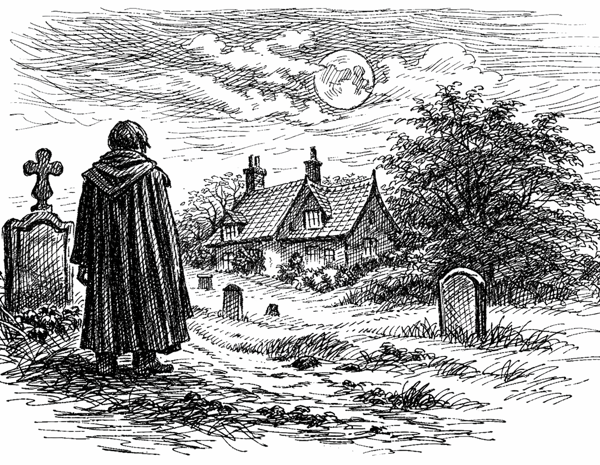
At first the answer seems obvious. A ghost appears, a mysterious object possesses strange powers, or an unseen force interferes with the world of the living. These elements are commonly recognised as supernatural because they appear to operate beyond the known laws of nature. In simple terms, supernatural events are usually understood as occurrences that cannot be explained through ordinary physical causes.
Yet this explanation alone does not fully capture what makes supernatural storytelling distinctive. Many stories contain strange or unexplained events without feeling truly supernatural. A tale becomes supernatural not simply because something unusual happens, but because it suggests the presence of an unseen order behind reality.
Supernatural fiction is concerned less with spectacle than with the possibility that the world is deeper and more mysterious than it appears.
The Suggestion of a Hidden World
The defining feature of supernatural fiction is the suggestion that reality contains layers beyond ordinary perception.
A supernatural story does not merely present an unusual event. Instead, it hints that something unseen exists behind the visible world. This might take the form of spirits lingering after death, ancient forces bound within objects, or subtle influences that guide events in ways the characters cannot fully understand.
The reader senses that the ordinary world has been disturbed by something older, stranger, or more powerful.
Often the story never fully explains what that hidden force is.
The Presence of the Uncanny
Another hallmark of supernatural storytelling is the feeling known as the uncanny. This occurs when something familiar becomes subtly wrong.
A room that should feel safe suddenly feels watched.
A photograph seems to contain a figure that should not be there.
A voice is heard in an empty house.
These moments are rarely dramatic in themselves. What gives them power is the way they disrupt normal expectations. The reader recognises that something about reality has shifted.
The supernatural often enters quietly.
The Role of Mystery
Unlike fantasy or science fiction, supernatural fiction rarely explains everything.
In fantasy stories the magical system is usually defined. The reader learns how the powers operate and what rules govern them. Supernatural fiction tends to resist this clarity. The forces involved are older, stranger, and often beyond human understanding.
This uncertainty is not a flaw. It is one of the genre’s greatest strengths.
The unexplained allows the reader’s imagination to remain active. Instead of providing a complete answer, the story leaves space for interpretation.
Human Witnesses
Supernatural stories are usually experienced through ordinary people.
The protagonist is often a scholar, investigator, traveller, or witness who encounters something unexpected. They do not begin the story believing in ghosts or hidden forces. Instead they slowly realise that their understanding of reality may be incomplete.
This perspective allows the reader to share the same uncertainty.
The supernatural rarely arrives with certainty. It emerges through doubt, observation, and uneasy discovery.
Atmosphere Before Action
In many supernatural tales the most important element is atmosphere.
The setting prepares the reader long before anything strange occurs. An isolated house, a forgotten archive, a remote village, or a quiet study lit by lamplight can create a sense that the past still lingers in hidden ways.
Weather, silence, architecture, and landscape all contribute to this mood.
The supernatural rarely bursts suddenly into the story. It grows slowly from the environment surrounding it.
The Supernatural as Possibility
Perhaps the most important quality of supernatural fiction is that it never insists too strongly on its own explanation.
Instead it offers the reader a possibility.
Was the apparition truly a ghost, or merely imagination?
Did the artefact possess hidden power, or did belief itself create the effect?
Did the character witness something real, or something misunderstood?
The story may never fully decide.
This uncertainty is not a weakness. It is what allows supernatural stories to linger in the mind long after they are finished.
The Beginning of the Craft
Understanding what makes a story supernatural is the first step in learning how to write one.
Supernatural fiction is not defined merely by ghosts, magic, or mysterious forces. It is defined by how those elements are introduced, suggested, and woven into the ordinary world.
The articles that follow explore these techniques in greater depth. We will look at how atmosphere is created, how supernatural encounters are revealed, and how hidden traditions and beliefs have shaped the genre across different historical periods.
Before any of that can be attempted, however, a writer must first recognise the central principle of supernatural storytelling.
The supernatural works best when it remains partly unseen.
Enjoying this series?
The full tutorial series is published here on the website, with new articles planned for the future. If you would like to be notified when new entries appear, you can subscribe to my Substack newsletter and receive an update whenever a new article is published.
Join me on Substack →
0 Comments